
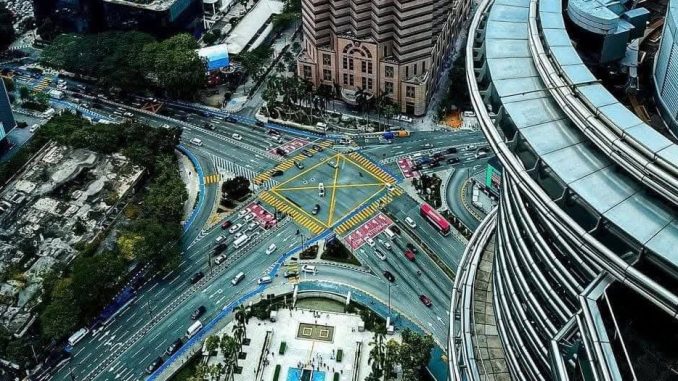

Malacca, QClubInternational.com – Stretching from quiet coastal villages on the east coast to gleaming business districts in the Klang Valley, a transformation spanning half a century has reshaped the face of Malaysia. It is not merely defined by taller buildings or smoother roads, but by shifts that reach into everyday life.
Better access to education, broader opportunities, and a brighter horizon for families across the land. For Hafiz Harun, a social observer who grew up through these very changes, this progress is far more than government statistics; it is a living, breathing reality he has witnessed and experienced firsthand.
He recalls his childhood vividly: a time when trips to the nearest town took hours along rutted roads, when reliable electricity and clean water were luxuries rather than givens, and when possibilities for young people in rural communities felt sharply limited. Today, that landscape has changed beyond recognition.

Wide highways curve through hills, digital networks reach remote settlements, and well-equipped public facilities stand within reach of nearly every neighbourhood. He explains that this transformation did not happen by chance, but grew from deliberate, long-term decisions that gradually laid a sturdy foundation for shared well-being across society.From independence onward, Malaysia moved steadily away from reliance on commodities like rubber and tin toward a diversified economy, first processing its own natural resources, then building a robust manufacturing base, and now advancing into services, innovation, and digital technology.
Infrastructure became the backbone of this journey: industrial zones, modern ports, national highway networks, and new railway and digital connectivity projects were not just feats of engineering, he notes, but bridges—connecting people to opportunities that once seemed unimaginable.
The most profound impact, he observes, is visible in daily life. Poverty that once affected more than half the population has fallen to single digits, household incomes have risen consistently, and access to quality education and healthcare is vastly more widespread than in generations past.

Children who once might only have dreamed of studying beyond their hometowns now routinely pursue higher education at home and abroad, returning with knowledge to build their own communities. Housing standards have improved, and life expectancy has climbed, tangible proof that economic growth has translated into genuine well-being for millions.
Yet Hafiz also acknowledges that progress has not been felt equally everywhere. Disparities remain: the rapidly developing west coast stands ahead of the eastern states, Sabah, and Sarawak, where communities still await fuller investment and inclusion. He emphasizes that a strong foundation is only the beginning; true success lies in ensuring all people share in its rewards.
Sustainable development, he says, is measured not by skyscrapers or investment figures alone, but by how far every member of society is able to grow alongside the nation. Economic stakeholders echo these balanced sentiments. They point to consistent policy frameworks, openness to international partnership, and steady investment in people as factors that have made Malaysia an attractive place to do business.

Large-scale projects such as the East Coast Rail Link and national digital initiatives are not only speeding up trade and lowering costs; they are creating new employment, sparking enterprise, and strengthening Malaysia’s standing in the region. Even so, they agree that equitable development remains the central challenge ahead, ensuring that growth benefits more than a fortunate few, and reinforces a shared foundation for generations to come.
Looking forward, Hafiz carries both pride and clear-eyed awareness. What has been built is a precious legacy, but the task of today’s generation is to safeguard it, broaden it, and ensure it is shared fairly. For him, Malaysia’s story is far from finished; it is still being written, by every person who goes to work, every child who attends school, and every family that holds fast to the hope of a better life. That, ultimately, is the truest foundation: not concrete and steel alone, but the quiet, steady confidence that tomorrow can be brighter than today. [Roy Agusta]
Leave a Reply