
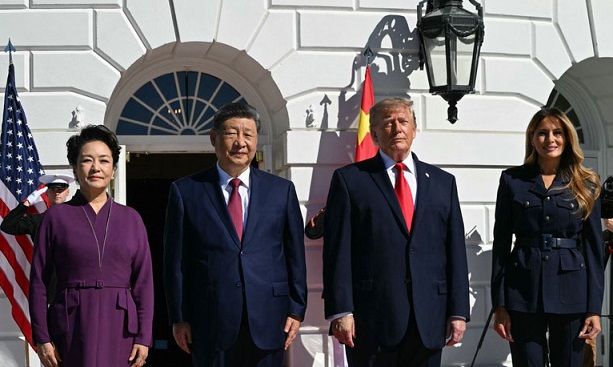

Washington DC, QClub International — A three-day summit between Chinese President Xi Jinping and U.S. President Donald Trump concluded on Friday, September 25, 2026, with a series of agreements covering trade, technology, and strengthened bilateral communication frameworks.
A key outcome was an accord establishing more favorable tariff treatment for approximately US$30 billion in non-sensitive goods from each nation. The arrangement covers commodities traded between China and the United States, though specific tariff rates and implementation timelines remain subject to follow-up bilateral negotiations.
The White House stated the U.S. goods under discussion include agricultural products, fish and seafood, timber and wood products, cosmetics, and certain medical devices. Meanwhile, Chinese goods eligible for potential reduced tariffs include small household appliances, toys, decorative items, and various other consumer products.
Both sides also agreed to operationalize the U.S.–China Trade Council as an official government-to-government mechanism to address trade frictions and market-access barriers. This framework builds on understandings reached during the leaders’ meeting in Beijing in May 2026.
China and the U.S. also expanded on economic discussions previously held in Kuala Lumpur, Malaysia. The latest agreement follows a two-month extension of the bilateral trade truce, granting Washington and Beijing additional time to negotiate a broader comprehensive trade deal.
Beyond trade, artificial intelligence (AI) emerged as a central agenda item during the Xi–Trump talks.The two nations committed to launching a bilateral dialogue on AI-related risks and benefits, with the next round scheduled for November. They will also establish a dedicated communication channel to address AI-linked incidents, particularly as rapid technological development carries potential broader implications.
The White House noted both sides agreed to reference the term “superintelligence” in their technical discussions. China emphasized the importance of advancing information sharing on AI developments and building consensus as the technology evolves.

These structured communication efforts are intended to ensure technological competition does not escalate into wider conflict.
On security matters, both nations committed to strengthening U.S.–China military-to-military communication. Plans were announced to sign a Crisis Communication Memorandum of Understanding (MoU) between respective military authorities. The mechanism is designed to enhance real-time dialogue and prevent misunderstandings or escalation during periods of tension.
This initiative forms part of broader efforts to translate commitments on strategic stability into practical, usable crisis-response protocols.
Despite tangible agreements, the summit did not resolve all structural economic differences between the two nations.Washington and Beijing retain divergent positions on market access, strategic supply chains, rare earth minerals, advanced technology, and industrial policy.
The U.S. government released a list identifying 77 Chinese product categories eligible for potential tariff reductions. China’s corresponding list of U.S. goods under consideration is far more extensive, covering over 1,600 categories including meat, seafood, dairy products, grains, coal, timber, and medical equipment.As such, the agreements should be viewed as incremental progress within a larger negotiation process, rather than a definitive resolution to U.S.–China trade disputes.

Beyond trade and technology, the leaders addressed key international issues.Both nations expressed support for multilateral forums including the Asia-Pacific Economic Cooperation (APEC) and the G20, and committed to participating in upcoming host-country-led meetings.
The situation in Iran was also discussed. President Xi encouraged the United States and Iran to return to dialogue and negotiation, with China voicing support for efforts to revive earlier shared understandings on the issue.
Both sides additionally affirmed their positions on nuclear non-proliferation and the importance of freedom of navigation in international waters.
The summit underscored that U.S.–China relations extend beyond official negotiations to include people-to-people ties. Washington announced two giant pandas will be sent to Atlanta Zoo under a long-term loan arrangement from China — an example of cultural and public diplomacy initiatives continuing amid strategic competition.
President Xi’s visit marked the first official state visit by a Chinese head of state to the United States since 2015, and the third face-to-face meeting between Xi and Trump during 2026, following their Beijing talks in May.

Leave a Reply